 Pearland Roofing
 Siding Repair and Trim in Pearland
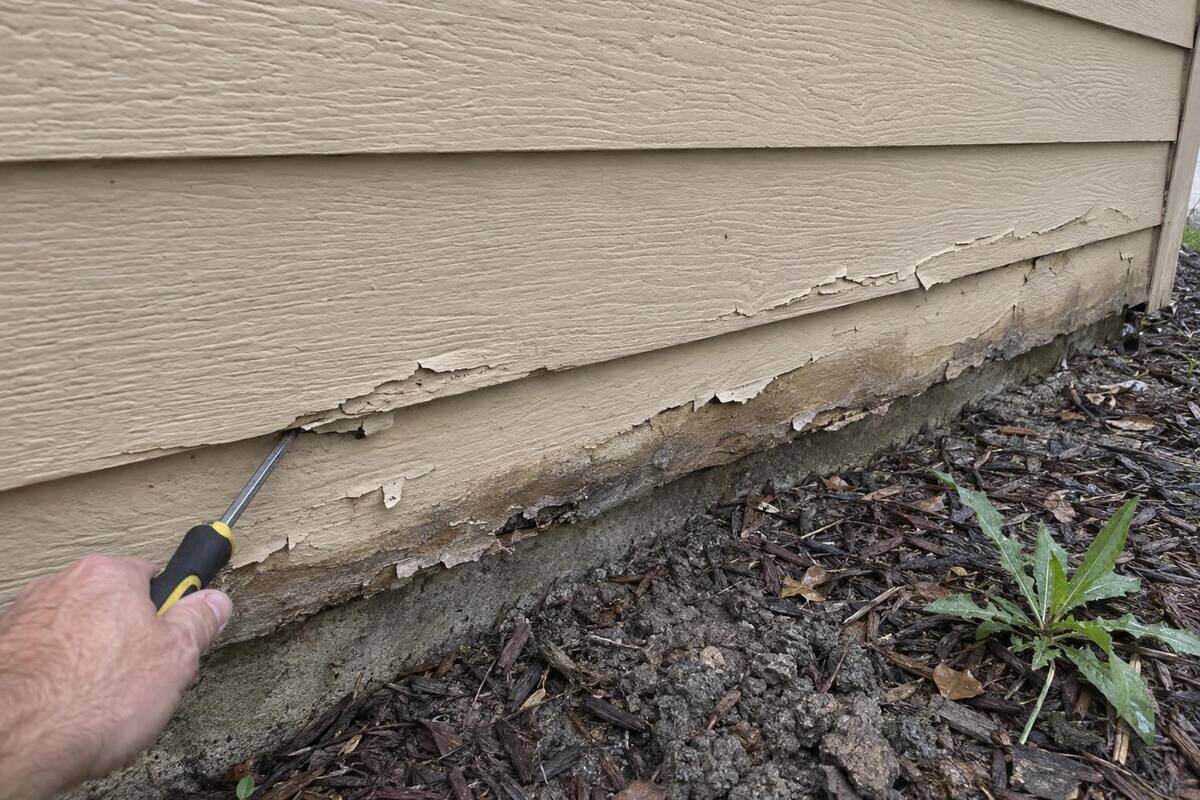
Hardboard, a pressed-wood lap siding, went on the gables and upper floors of a great many Pearland houses through the 1990s. Once water gets into its bottom edge, it swells, softens and flakes. This page is for those houses.
How to Recognize It
- Lap siding with an embossed wood-grain texture that is lighter than it looks and dents under a thumbnail when soft.
- Swelling and flaking along the bottom edges of the planks, worst on the lowest course and under windows.
- Paint that keeps failing in the same places, because water is getting in behind it.
Patch, Section or Whole Wall
| Condition | Usual approach |
|---|---|
| A few soft planks, the rest sound | Replace those planks; hardboard-profile replacements or fiber cement cut to match |
| One elevation bad, the others fine | Re-side that wall, often in fiber cement, and repaint to blend |
| Soft planks on every side | Full replacement of the hardboard; check the sheathing and framing behind it |
Trim Is Usually Part of It
Corner boards, window trim and frieze boards on houses of this age were often the same pressed-wood material, and they rot for the same reasons. Replacing siding and leaving a soft corner board beside it just moves the next repair a few inches.
On Green Tee Terrace, Country Place and Southdown houses from the 1970s and 1980s, expect some of the original siding to have been patched already, sometimes in a different product. That is fine if it was flashed and painted properly.
Soft Siding on the Gables?
Call with the build year. The contractor will say whether it is a patch or a wall.
Call (346) 271-5264 Ask for a Free Roof Review