 Pearland Roofing
 Fiber Cement Siding in Pearland
On most Pearland houses built from about 2000 onward, everything above the brick is fiber cement: a heavy, stiff, painted lap plank. It outlasts the hardboard it replaced, but it is only as good as its paint, its caulk and the clearances it was installed with.
What Goes Wrong on It
Butt-joint caulk
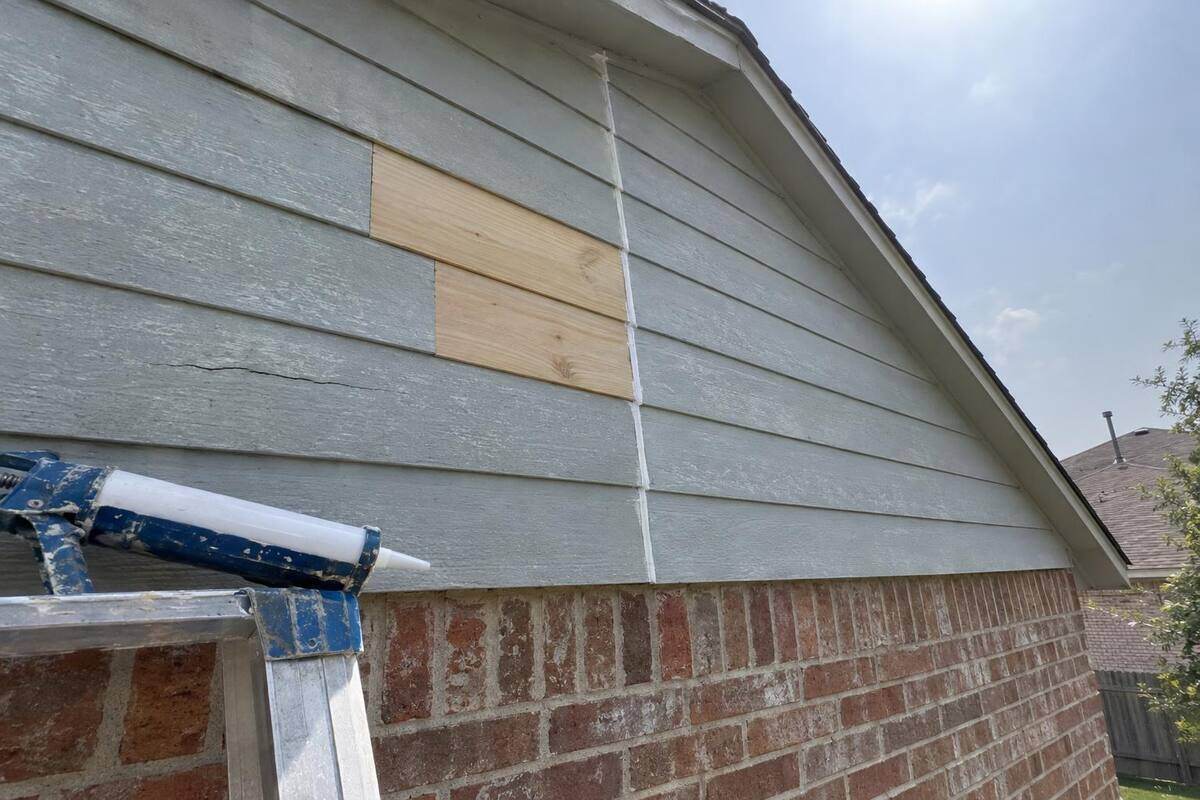
Where two planks meet end to end, caulk that has shrunk and opened lets water behind the siding.
Cracked planks
From nails driven too hard or too close to the edge, or a ladder leaned against it.
Missing clearances
Planks run down onto a roof or into the flower bed wick water up their cut ends.
Paint
Factory or site paint that has chalked on the south and west walls after ten to fifteen summers.
By Build Year
On a Shadow Creek Ranch or Highland Glen house from the early 2000s, the siding is past twenty years and most of it has been painted at least once; failed caulk and a few cracked planks are the norm. On a Southern Trails house from the 2010s, the first repaint is often due, and it is the moment to re-caulk every joint and check the kick-out flashing where roof lines meet the walls.
Working With It Safely
Cutting fiber cement makes fine silica dust. Contractors who work with it cut outdoors with dust-controlled saws or shears; ask how they handle it if the job is near open windows, a patio or a play area.
Cracked Planks or Open Joints?
Say roughly when the house was built and which walls face the afternoon sun.
Call (346) 271-5264 Ask for a Free Roof Review