 Pearland Roofing
 Roof Leak Repair in Pearland
Most leaks are not in the middle of a slope. They are where something goes through the roof or where the roof runs into something, and on the two-story houses that fill Pearland’s 1990s and 2000s subdivisions, the second one is common.
Five Places, Roughly in Order of How Often
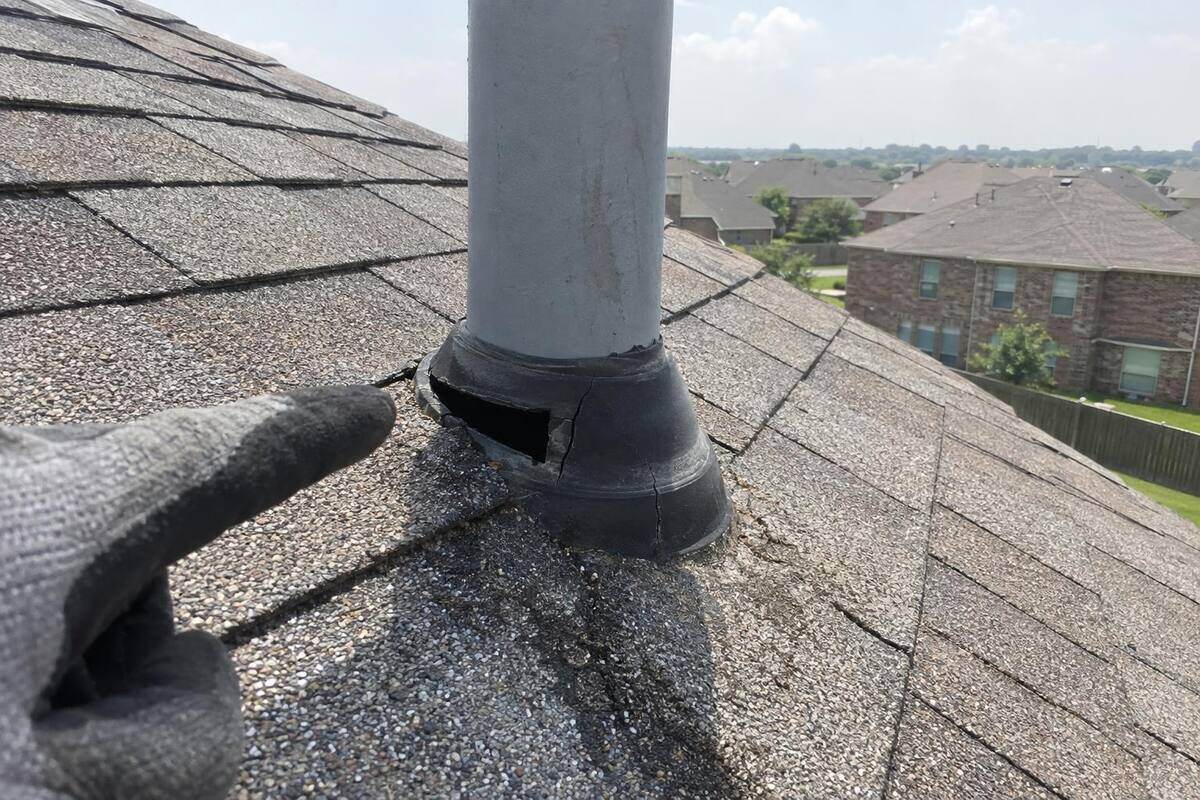
- Vent boots. The rubber collar around a plumbing vent cracks in the sun well before the shingles around it are done, often somewhere around year eight to twelve.
- Roof-to-wall joints. Where a first-floor roof meets a second-story wall, step flashing and a kick-out at the bottom carry water past the siding. When the kick-out is missing, water runs into the wall.
- Valleys. Two slopes meeting carry twice the water; a valley laid short or nailed too close to its center leaks in heavy rain.
- Chimney chases and skylights. Counter-flashing and sealant that have dried out.
- Ridge and hip caps. Lifted or cracked after wind.
What to Do Before Anyone Arrives
Put a bucket under a drip and move what you can out of the way. If the ceiling is sagging with water, keep people out from under it. From the attic hatch, a flashlight often shows the wet trail on the decking or the rafters, and a phone photo of it saves the contractor time.
Note the direction the rain was blowing. A leak that only shows up in a south wind points at a different part of the roof than one that shows up in any heavy rain.
Two Common Questions
-
There is a stain on the ceiling but it is not dripping. Is it urgent?
Not an emergency, but do not leave it. A stain means water reached the drywall at least once. Note the date and whether it grows after the next rain, and have the roof looked at.
-
Should I go up on the roof to look?
No. A wet roof on a two-story house is dangerous. Look from the ground and from the attic hatch with a flashlight, and leave the roof to the contractor.
Water Coming In?
Call rather than filling in the form. A roof that is leaking gets a call back first.
Call (346) 271-5264 Ask for a Free Roof Review